
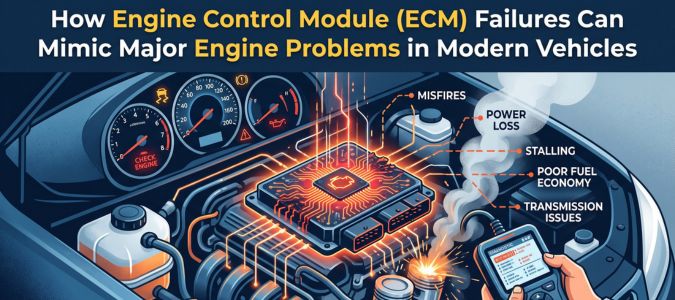
How Engine Control Module (ECM) Failures Can Mimic Major Engine Problems in Modern Vehicles
An Engine Control Module (ECM) failure can cause symptoms that closely resemble serious engine problems, including rough idling, poor acceleration, stalling, and even no-start conditions. Before replacing an engine, it’s essential to diagnose the ECM and related electrical systems. If an engine truly has failed beyond repair, professionally inspected used engines and quality used engines can provide a reliable and cost-effective replacement solution.
Table of Contents
- What is an Engine Control Module (ECM)?
- Why ECM failures are becoming more common
- Symptoms that mimic engine failure
- How technicians diagnose ECM problems
- When engine replacement is actually necessary
- Why OEM used engines remain a smart option
- FAQs
What Is an Engine Control Module?
The Engine Control Module (ECM) is often called the brain of your vehicle. It manages nearly every aspect of engine operation by processing information from dozens of sensors and making real-time adjustments to keep the engine running efficiently.
The ECM controls systems such as:
- Fuel injection
- Ignition timing
- Air-to-fuel ratio
- Variable valve timing
- Idle speed
- Emissions controls
Because the ECM communicates with so many components, even a small malfunction can create symptoms that appear much more serious than they actually are.
Why ECM Failures Are Increasing in Modern Vehicles
Vehicles built in recent years rely more heavily on electronics than ever before. Advanced driver assistance systems, turbocharged engines, hybrid technology, and stricter emissions standards all place greater demands on the vehicle’s electronic control systems.
Several factors can contribute to ECM failure, including:
- Moisture intrusion
- Voltage spikes
- Corroded electrical connectors
- Damaged wiring
- Overheating
- Internal circuit failure
As vehicles age, these problems become more common, particularly in high-mileage cars.
Symptoms That Can Be Mistaken for Engine Failure
An ECM problem doesn’t always trigger a complete shutdown. Instead, it often produces symptoms that resemble mechanical engine damage.
Common signs include:
- Engine Misfires: Incorrect fuel or ignition timing may cause one or more cylinders to misfire, making the engine run roughly.
- Poor Acceleration: If the ECM cannot accurately control fuel delivery, the vehicle may hesitate or struggle during acceleration.
- Hard Starting or No Start: A faulty ECM may fail to send the proper signals needed to start the engine, even when the battery and starter are working correctly.
- Stalling Unexpected stalling while driving is another common symptom of ECM malfunction.
- Reduced Fuel Economy: Incorrect sensor readings can cause the engine to consume more fuel than necessary.
- Check Engine Light: An illuminated Check Engine light is often one of the earliest indicators that the ECM has detected an abnormal operating condition.
Because these symptoms closely resemble mechanical failures, a proper diagnosis is essential before replacing major components.
Why Accurate Diagnosis Matters
Replacing an engine is one of the most expensive automotive repairs. Misdiagnosing an ECM issue as engine failure can result in unnecessary costs and frustration.
Experienced technicians use advanced diagnostic tools to:
- Read fault codes
- Monitor live sensor data
- Test wiring circuits
- Verify power and ground connections
- Evaluate ECM communication
This systematic approach helps determine whether the issue is electronic or mechanical.
Other Problems That Can Mimic Engine Failure
In addition to the ECM, several components may create similar symptoms:
- Crankshaft position sensor
- Camshaft position sensor
- Ignition coils
- Fuel injectors
- Fuel pump
- Mass airflow sensor
- Throttle body
Testing these systems before replacing an engine can save considerable time and money.
When Engine Replacement Is the Better Solution
Sometimes diagnostics confirm that the engine itself has suffered severe internal damage, such as:
- Low compression
- Broken connecting rods
- Cracked engine block
- Severe overheating damage
- Timing chain failure
In these situations, replacing the engine is often more practical than rebuilding it.
Many vehicle owners choose professionally inspected used engines because they offer OEM quality at a significantly lower cost than purchasing a brand-new engine.
Why Quality Used Engines Make Sense
Modern replacement engines undergo detailed inspections before being offered for sale.
Choosing quality used engines provides several advantages:
- Lower replacement costs
- OEM engineering
- Proven compatibility
- Faster availability
- Long service life
Many come from low-mileage donor vehicles that were involved in collisions rather than mechanical failures.
Choosing a Reliable Engine Supplier
Not every supplier follows the same quality standards.
Look for companies that offer:
- Mileage verification
- Compression testing
- Warranty coverage
- Vehicle compatibility assistance
- Thorough inspections
Buying from a reputable supplier increases confidence in the reliability of the replacement engine.
Preventing Future ECM Problems
Although some electronic failures are unavoidable, regular maintenance can reduce the likelihood of ECM-related issues.
Helpful maintenance practices include:
- Keeping battery terminals clean
- Inspecting wiring regularly
- Repairing coolant leaks promptly
- Avoiding jump-start voltage spikes
- Installing software updates when available
Routine inspections help identify electrical problems before they affect engine performance.
Final Thoughts
Engine Control Module failures can produce symptoms that closely resemble major engine damage, making proper diagnosis essential before beginning expensive repairs. Rough idling, stalling, poor acceleration, and starting problems are not always signs of a worn-out engine-they may simply indicate an electronic control issue.
If diagnostics reveal that the engine itself has suffered irreversible damage, professionally inspected used engines and quality used engines offer dependable, affordable alternatives to costly new replacements. By combining accurate diagnostics with high-quality OEM replacement components, drivers can restore vehicle performance while keeping repair costs under control.
FAQs
Yes. A faulty ECM can cause misfires, stalling, poor acceleration, and no-start conditions that closely resemble serious engine failure.
Technicians use diagnostic scanners, voltage tests, wiring inspections, and live sensor data to determine whether the ECM is functioning properly.
In some cases, an ECM can be repaired or reprogrammed. However, severe internal damage often requires replacement.
If diagnostics confirm severe internal damage such as low compression, cracked engine components, or catastrophic timing failure, replacing the engine may be the most cost-effective option.
Professionally inspected quality used engines provide OEM reliability, lower repair costs, verified compatibility, and dependable long-term performance, making them an excellent choice for many vehicle owners.