
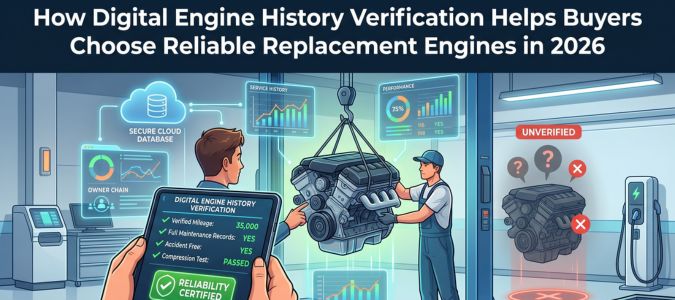
How Digital Engine History Verification Helps Buyers Choose Reliable Replacement Engines in 2026
Purchasing a replacement engine is a significant investment, and buyers want confidence that the engine they choose will deliver dependable performance for years to come. Fortunately, advancements in digital recordkeeping have transformed the used auto parts industry. In 2026, digital engine history verification allows buyers to access valuable information about an engine’s background, helping them make informed purchasing decisions while reducing the risk of unexpected problems.
Whether you’re replacing a damaged engine or restoring an older vehicle, verifying an engine’s history can be just as important as inspecting its physical condition. Buyers searching for quality used engines and used engines with warranty increasingly rely on digital verification to identify trustworthy replacement options.
What Is Digital Engine History Verification?
Digital engine history verification is the process of reviewing electronic records related to a replacement engine before purchase.
Depending on the supplier and available records, buyers may be able to verify:
- Engine identification number
- Original vehicle information
- Recorded mileage
- Service history
- Previous ownership details
- Salvage or insurance records
- Inspection reports
- Compatibility information
These records help create a clearer picture of the engine’s overall condition and expected reliability.
Why Engine History Matters
A replacement engine may appear to be in excellent condition externally, but its operational history tells a much more complete story.
Verifying the engine’s background helps buyers avoid engines that may have experienced:
- Severe overheating
- Flood damage
- Poor maintenance
- Major internal failures
- Accident-related damage
- Excessive wear
Knowing this information before purchasing reduces uncertainty and helps prevent costly mistakes.
Greater Confidence for Buyers
One of the biggest advantages of digital verification is transparency.
Instead of relying solely on visual inspections, buyers gain access to documented information that supports the engine’s condition.
This transparency allows customers to purchase with greater confidence, particularly when investing in quality used engines for long-term vehicle reliability.
Verifying Mileage Accuracy
Mileage is one of the most important factors affecting engine value.
Digital records help confirm:
- Reported mileage
- Vehicle usage history
- Maintenance intervals
- Overall engine wear expectations
Accurate mileage verification helps buyers compare replacement engines more effectively.
Supporting Better Compatibility
Modern vehicles contain highly specialized engine configurations.
Digital verification helps confirm compatibility by checking:
- Engine codes
- Model year
- Vehicle make
- Engine specifications
- Emissions requirements
- Electronic system compatibility
Choosing the correct engine reduces installation problems and preserves factory performance.
The Importance of Professional Inspections
Digital records are most valuable when combined with physical inspections.
Many reputable suppliers perform:
- Compression testing
- Leak-down testing
- Oil inspection
- Cooling system evaluation
- Sensor inspections
- Visual damage assessment
Together, digital verification and mechanical testing provide a more complete evaluation of engine condition.
Why Used Engines with Warranty Offer Extra Protection
Many trusted suppliers offer used engines with warranty after completing detailed inspections and verification procedures.
Warranty coverage often reflects the supplier’s confidence in the engine’s quality.
Additional benefits may include:
- Mechanical inspection reports
- Verified compatibility
- Customer support
- Replacement assistance (subject to warranty terms)
- Greater purchasing confidence
Warranty-backed engines help reduce financial risk after installation.
Benefits for Repair Shops
Professional repair facilities also benefit from digital engine verification.
Verified records help technicians:
- Recommend suitable replacements
- Confirm compatibility
- Estimate installation requirements
- Reduce customer concerns
- Minimize return rates
Accurate information leads to smoother repairs and improved customer satisfaction.
Digital Technology Continues Improving
The automotive recycling industry is rapidly adopting new technologies.
Many suppliers now use:
- Cloud-based inventory systems
- VIN decoding software
- Barcode tracking
- Digital inspection reports
- Online inventory databases
- Electronic documentation
These systems improve inventory accuracy while simplifying the purchasing process.
Choosing a Reliable Supplier
Not every supplier follows the same inspection standards.
Before purchasing a replacement engine, buyers should look for companies that provide:
- Verified engine history
- Professional inspection reports
- Clear mileage information
- Warranty options
- Compatibility verification
- Responsive customer service
Working with experienced suppliers greatly improves the likelihood of receiving a dependable replacement engine.
Tips Before Purchasing
Before finalizing your purchase:
- Verify engine compatibility.
- Review available history reports.
- Confirm mileage documentation.
- Ask about inspection procedures.
- Understand warranty coverage.
- Choose reputable suppliers with positive customer feedback.
Taking these steps helps reduce risk and supports a successful engine replacement.
The Future of Digital Engine Verification
Technology will continue improving how replacement engines are evaluated.
Future innovations may include:
- AI-assisted engine condition analysis
- Blockchain-based ownership records
- Predictive reliability scoring
- Advanced digital maintenance histories
- Automated compatibility verification
These advancements will make buying replacement engines even safer and more transparent.
Final Thoughts
Digital engine history verification has become an essential tool for buyers seeking dependable replacement engines in 2026. By combining electronic records with professional inspections, buyers can better understand an engine’s condition, verify compatibility, and reduce the risks associated with purchasing used automotive components.
For anyone searching for quality used engines, digital verification provides valuable insight into mileage, maintenance history, and overall reliability. Choosing used engines with warranty adds another layer of confidence by offering professionally inspected engines backed by supplier support. As digital technology continues transforming the automotive industry, informed buyers will benefit from greater transparency, improved reliability, and smarter replacement engine decisions.
FAQs
Digital engine history verification involves reviewing electronic records such as mileage, service history, inspection reports, and compatibility information before purchasing a replacement engine.
Engine history helps identify previous damage, maintenance records, mileage accuracy, and overall engine condition, allowing buyers to make informed purchasing decisions.
Yes. Professionally inspected quality used engines with verified history records can provide dependable long-term performance when sourced from reputable suppliers.
Used engines with warranty provide added peace of mind by offering inspection-backed reliability and protection against covered mechanical issues according to the supplier’s warranty terms.
Verify compatibility, review digital engine history, confirm mileage, request inspection reports, understand warranty coverage, and purchase from a trusted supplier with a strong reputation.