
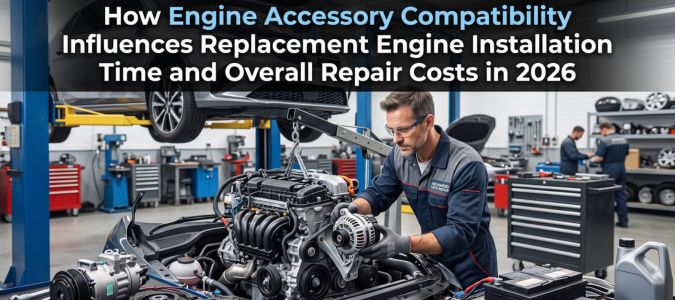
How Engine Accessory Compatibility Influences Replacement Engine Installation Time and Overall Repair Costs in 2026
Replacing an engine involves much more than removing the old powertrain and installing another unit. Accessories and external components such as alternators, starter motors, intake manifolds, exhaust components, sensors, brackets, pulleys, and cooling-system connections must work correctly with the replacement engine. Buyers comparing affordable used engines should therefore consider accessory compatibility alongside engine condition and price. Similarly, suppliers offering used engines with warranty can provide valuable coverage, but buyers should still verify which components are included and whether existing accessories can be transferred. In 2026, understanding accessory compatibility can help reduce installation delays, unexpected parts purchases, and overall repair costs.
What Are Engine Accessories?
Engine accessories are external components that support the engine’s operation and its integration with the vehicle. Depending on the vehicle, these may include:
- Alternator
- Starter motor
- Power steering components
- Air-conditioning compressor
- Intake manifold
- Exhaust manifold
- Throttle body
- Sensors
- Engine brackets
- Pulleys
- Tensioners
- Cooling-system connections
The exact configuration varies according to the vehicle, engine family, model year, drivetrain, and equipment package.
Why Accessory Compatibility Matters
Two engines may share the same basic architecture while using different external components. For example, an engine from one vehicle configuration may have different:
- Mounting brackets
- Wiring connections
- Sensor arrangements
- Intake components
- Exhaust connections
- Accessory mounting points
If these differences are discovered only after installation begins, the repair may take longer and require additional parts. This is why compatibility should be checked before purchasing a replacement engine.
How Accessories Affect Installation Time
Engine replacement already involves substantial labor. When compatible accessories are available, technicians can generally work through the installation process more efficiently.
However, incompatible components can create additional work, including:
- Removing accessories from the original engine
- Transferring components
- Finding replacement brackets
- Modifying connections
- Checking wiring
- Reinstalling belts and pulleys
- Testing additional components
Every additional step can increase labor time.
Accessory Compatibility and Engine Mounting
Engine mounts are among the most important compatibility considerations. The replacement engine must work with the vehicle’s mounting configuration. Even when the engine itself is compatible, differences in brackets or mounting hardware can create installation complications.
Before purchasing, buyers should verify:
- Engine family
- Vehicle application
- Mounting configuration
- Model year
- Drivetrain
- Required brackets
A supplier should be able to clarify whether the engine is supplied with its original mounting hardware or as a long-block assembly.
Intake and Exhaust Compatibility
The intake and exhaust systems connect the engine to other vehicle systems. Differences in manifold design can affect how these components connect to the vehicle.
For example, a replacement engine may require the original vehicle’s:
- Intake manifold
- Exhaust manifold
- Throttle body
- Fuel-system components
- Sensors
Whether components can be transferred depends on the engine and vehicle configuration. Checking these requirements before installation can prevent unexpected delays.
Cooling-System Connections
The cooling system must also be compatible with the replacement engine. Relevant components may include:
- Water outlets
- Thermostat housing
- Coolant pipes
- Hoses
- Radiator connections
- Temperature sensors
Even small differences in connection locations can require additional parts or component transfers. A technician should verify cooling-system compatibility before final installation.
Electrical and Sensor Compatibility
Modern engines rely on multiple electronic components. These may include:
- Crankshaft sensors
- Camshaft sensors
- Oxygen sensors
- Temperature sensors
- Knock sensors
- Throttle-position sensors
A replacement engine may use different sensors or connectors depending on its original application. This is one reason vehicle VIN information and engine identification details are useful when sourcing a replacement.
How Accessory Compatibility Affects Repair Costs
The purchase price of an engine is only one part of the total replacement cost. Additional expenses may include:
- Labor
- Gaskets
- Fluids
- Belts
- Hoses
- Sensors
- Brackets
- Mounting hardware
- Accessory replacement
- Diagnostic work
An apparently inexpensive engine can become more expensive if numerous incompatible components must be replaced.
This is why buyers should evaluate the complete installation requirement rather than focusing solely on the advertised engine price.
Comparing Affordable Used Engines
When searching for affordable used engines, buyers should look beyond the initial price. Important questions include:
- What engine configuration is being supplied?
- Which accessories are included?
- What mileage or operating history is available?
- Is the engine tested?
- Does it match the vehicle VIN?
- Are external components included?
- What additional parts may be required?
A lower purchase price does not necessarily mean a lower total replacement cost.
Understanding Used Engines With Warranty
A warranty can provide additional protection when purchasing replacement powertrains. Buyers considering used engines with warranty should carefully review the warranty terms before purchasing.
Important details can include:
- Warranty duration
- Covered components
- Labor coverage
- Exclusions
- Installation requirements
- Return conditions
- Claim procedures
A warranty may cover the engine assembly while excluding certain external accessories, so buyers should understand exactly what is protected.
Long-Block vs. Complete Engine Assemblies
Replacement engines can be supplied in different configurations. A long-block assembly may include major internal engine components but require the buyer or technician to transfer certain external accessories.
A more complete assembly may include additional components. The exact contents vary by supplier and engine type. Before purchasing, buyers should ask for a detailed list of included components.
How Pre-Purchase Verification Saves Time
The easiest way to reduce installation delays is to identify compatibility issues before the engine arrives.
Buyers can provide the supplier with:
- VIN
- Vehicle year
- Make and model
- Engine size
- Engine code
- Transmission information
- Existing engine identification details
This information can help suppliers identify the appropriate replacement configuration.
Best Practices for Replacement Engine Buyers
Before purchasing a replacement engine in 2026:
- Verify the engine family.
- Provide the vehicle VIN.
- Confirm mounting compatibility.
- Check accessory configuration.
- Ask which components are included.
- Review warranty coverage.
- Compare total installation costs.
- Have a qualified technician inspect compatibility before installation.
Final Thoughts
Engine accessory compatibility can significantly influence both installation time and the total cost of a replacement-engine project. Differences in brackets, sensors, manifolds, pulleys, wiring, cooling connections, and other external components can create additional labor and parts requirements when they are not identified in advance.
When comparing affordable used engines, buyers should evaluate the complete installation requirements instead of focusing only on the initial purchase price. For used engines with warranty, understanding the exact warranty coverage and included components is equally important.
By verifying engine configuration, accessory compatibility, VIN information, included parts, and warranty terms before purchase, vehicle owners can reduce unexpected expenses and make the replacement process more predictable in 2026.