
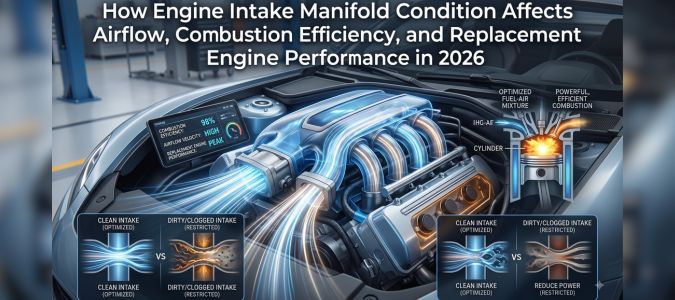
How Engine Intake Manifold Condition Affects Airflow, Combustion Efficiency, and Replacement Engine Performance in 2026
The intake manifold plays an important role in delivering air to an engine’s cylinders and supporting consistent combustion. When evaluating a replacement Used Engine, buyers and technicians should consider the condition of the intake manifold because cracks, deposits, leaks, or damaged components can affect airflow and engine operation. Purchasing used engines with warranty can provide additional purchase protection, but checking intake-system condition before installation remains an important part of evaluating a replacement engine in 2026.
What Is an Engine Intake Manifold?
The intake manifold is the component that distributes incoming air, or an air-fuel mixture in certain engine designs, to the engine’s cylinders.
Its design varies according to the engine configuration and fuel system. An intake manifold may influence:
- Air distribution
- Cylinder filling
- Throttle response
- Combustion consistency
- Engine efficiency
- Overall drivability
Because airflow is essential to combustion, intake manifold condition can have a direct effect on how an engine performs.
Why Intake Manifold Condition Matters
A replacement engine can have otherwise acceptable internal components but still experience performance problems if the intake system has leaks or damage.
Common intake manifold problems include:
- Cracks
- Warped mounting surfaces
- Failed gaskets
- Carbon deposits
- Vacuum leaks
- Damaged fittings
- Loose fasteners
These issues can interfere with the controlled delivery of air into the cylinders.
How Intake Leaks Affect Airflow
An intake manifold leak can allow air to enter the system through unintended paths. This can disturb the expected air-fuel mixture and create problems such as:
- Rough idle
- Hesitation
- Poor throttle response
- Misfires
- Unstable engine speed
- Check-engine warnings
The severity of these symptoms depends on the location and size of the leak and the engine’s control system. For this reason, intake manifold sealing surfaces should be inspected before installation.
Intake Manifold and Combustion Efficiency
Combustion requires the appropriate combination of air, fuel, compression, and ignition timing. If airflow to individual cylinders becomes inconsistent, combustion may also become inconsistent.
An intake manifold with deposits, restrictions, or design-related problems may affect how efficiently air reaches the cylinders. This is particularly important in modern engines that use sophisticated electronic fuel and airflow management systems.
Inspecting the Intake Manifold Before Installation
When evaluating a replacement engine, technicians can inspect the intake manifold for visible damage and potential sealing problems.
Important inspection points include:
- Cracks in the manifold body
- Damaged mounting surfaces
- Gasket condition
- Loose or missing hardware
- Broken vacuum fittings
- Carbon or oil deposits
- Signs of previous repairs
If a manifold appears damaged, further testing may be appropriate before the engine is installed.
Checking Intake Manifold Gaskets
The gasket between the intake manifold and cylinder head helps maintain an appropriate seal. A damaged, compressed, or deteriorated gasket can result in an air leak.
During replacement-engine preparation, technicians may replace intake manifold gaskets rather than reinstalling old sealing materials. The correct gasket type and installation procedure should always follow the engine manufacturer’s specifications.
Carbon and Deposit Buildup
Deposits can accumulate inside intake passages over time, depending on engine design, fuel system, operating conditions, and maintenance history. Excessive deposits may restrict airflow or alter the characteristics of the intake passages.
When inspecting a Used Engine, technicians can check accessible intake areas for unusual buildup.
However, not every deposit indicates a serious problem, so findings should be evaluated according to the specific engine design.
Intake Manifold and Throttle Response
The intake system influences how quickly air reaches the cylinders when the driver changes throttle position. Problems such as leaks, restrictions, or damaged components may contribute to delayed or inconsistent throttle response.
After installation, technicians should verify that the throttle body, intake manifold, sensors, and related components are properly connected and functioning.
Electronic Sensors and Intake Performance
Modern engines commonly use sensors to monitor airflow, pressure, temperature, and other operating conditions. Depending on the engine, these may include:
- Mass airflow sensors
- Manifold absolute pressure sensors
- Intake air temperature sensors
- Throttle position sensors
A replacement engine’s sensors and wiring should be checked for compatibility with the vehicle. Sensor problems can sometimes produce symptoms that appear to be caused by the intake manifold itself.
Why Engine Compatibility Still Matters
An intake manifold may physically resemble another component while having different ports, mounting points, sensor locations, or airflow characteristics.
Therefore, buyers should verify engine compatibility using:
- VIN information
- Engine identification numbers
- Part numbers
- Vehicle specifications
- Original equipment requirements
A properly matched engine reduces the risk of unnecessary modifications during installation.
The Role of Warranty Coverage
Purchasing used engines with warranty can provide additional protection when the replacement engine is supplied with clearly defined warranty terms. However, buyers should understand what the warranty covers.
Important considerations include:
- Coverage duration
- Covered components
- Installation requirements
- Labor coverage
- Exclusions
- Return procedures
- Claim requirements
Warranty protection should complement, rather than replace, careful pre-installation inspection.
Preparing the Intake System for Installation
Before installing a replacement engine, technicians should inspect or replace appropriate intake-related components according to the application.
This may include:
- Intake manifold gaskets
- Vacuum hoses
- Throttle-body seals
- Air ducts
- Sensors
- Fasteners
- Related fittings
Proper installation helps establish the intended airflow path and reduce the possibility of avoidable leaks.
Final Thoughts
The engine intake manifold is an important part of the airflow system and can influence combustion consistency, throttle response, and overall replacement engine performance. Cracks, gasket problems, deposits, restrictions, and vacuum leaks can interfere with proper air delivery and should be considered during pre-installation evaluation.
When purchasing a Used Engine, buyers should evaluate intake manifold condition alongside engine identification, internal inspection, compatibility, and testing. For customers considering used engines with warranty, understanding warranty coverage and installation requirements provides additional clarity.
A careful inspection and proper installation can help ensure that the replacement engine’s intake system supports reliable airflow and efficient operation throughout its service life.