
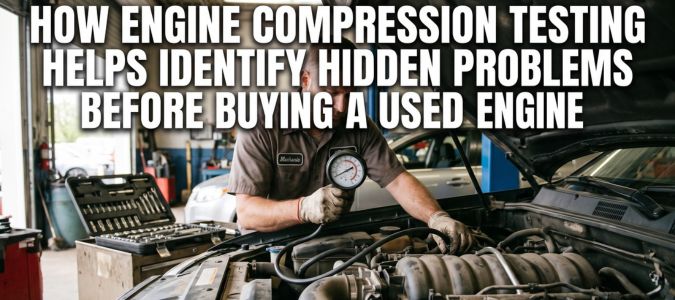
How Engine Compression Testing Helps Identify Hidden Problems Before Buying a Used Engine
Buying a used engine can be a practical way to get your vehicle back on the road without the expense of replacing the entire vehicle. However, choosing quality used engines requires more than simply comparing prices or checking the engine’s exterior condition. Internal wear and hidden mechanical problems may not always be visible during a basic inspection. That is why engine compression testing is an important step when evaluating a replacement engine. Buyers looking for used engines with warranty should also consider compression results, inspection records, engine history, and warranty coverage before making a purchase.
What Is an Engine Compression Test?
An engine compression test measures the pressure produced inside each cylinder when the engine is cranked. During normal engine operation, the piston moves upward and compresses the air-fuel mixture inside the cylinder. The pressure produced during this process can provide useful information about the condition of several internal components.
A compression test is generally performed by removing the spark plugs on a gasoline engine and installing a compression gauge in each cylinder. The engine is then cranked, allowing the technician to record the pressure produced by each cylinder. The readings can then be compared with manufacturer specifications and with the readings from the other cylinders.
Diesel engines can also undergo compression testing, although the procedure and equipment used are different from those used for gasoline engines.
Why Compression Testing Matters for Used Engines
A used engine may appear clean and complete on the outside while having internal wear that cannot be identified through a basic visual inspection. Compression testing provides additional information about the condition of the cylinders and other internal engine components.
For example, unusually low compression in one cylinder can point toward a problem involving a valve, piston, piston rings, cylinder wall, or head gasket. Low readings across several cylinders may indicate more extensive wear or another underlying mechanical issue.
A compression test does not always identify the exact cause of a problem by itself. However, unusual results can alert a technician that additional testing may be necessary before the engine is purchased or installed.
What Uneven Compression Readings Can Reveal
The consistency of compression readings between cylinders is an important part of the evaluation. The expected pressure varies depending on the engine design, so readings should be compared with the appropriate manufacturer specifications.
Significant differences between cylinders may be associated with issues such as:
- Worn or damaged piston rings
- Cylinder wall wear
- Leaking or damaged valves
- Head gasket problems
- Piston damage
- Valve timing problems
- Internal engine wear
When compression readings are lower than expected, a technician may recommend additional diagnostic procedures. A leak-down test, for example, can help identify where pressure is escaping from the cylinder.
This additional testing can be particularly useful when evaluating a used engine because it provides more information than simply starting the engine and listening for unusual sounds.
Consider the Engine’s History Along With Testing
Compression results are only one part of evaluating a used engine. The engine’s mileage, previous vehicle, maintenance history, storage conditions, and inspection records can also provide valuable information.
When searching for quality used engines, buyers should ask whether the engine has been inspected and tested before being offered for sale. Information about mileage and the original vehicle application can also help buyers understand what they are purchasing.
It is also important to confirm that the replacement engine is compatible with the intended vehicle. Engine size, model year, drivetrain configuration, wiring, sensors, emissions equipment, and other components can vary between applications.
Why Warranty Coverage Matters
Even when a used engine has been inspected and tested, it is still a previously operated mechanical component. For this reason, warranty coverage can be an important consideration when comparing replacement engines.
Purchasing used engines with warranty coverage can provide additional protection if a qualifying issue occurs during the applicable warranty period. However, warranty terms can differ between suppliers, so buyers should carefully review the details before completing a purchase.
Important points to check may include warranty duration, mileage limitations, covered components, installation requirements, exclusions, and whether labor costs are included. Understanding the warranty before purchasing can help buyers know what protection is available if an eligible problem occurs.
Test the Engine Before Installation When Possible
Evaluating a used engine before installation can help reduce the possibility of discovering a major issue after the engine has already been fitted to the vehicle. Removing and reinstalling an engine can require significant time and labor, making pre-installation evaluation valuable.
Ask the supplier what inspections and tests have been completed. If compression testing was performed, ask whether the results are available. Buyers should also verify the engine identification and make sure the supplied engine matches their vehicle’s specifications.
A proper match can help avoid compatibility problems involving sensors, wiring, accessories, mounting points, emissions components, and electronic systems.
Other Used Engine Checks to Consider
Compression testing should be considered part of a broader inspection rather than the only evaluation method. Depending on the engine, a technician may also inspect the oil, coolant passages, external surfaces, cylinder heads, timing components, seals, mounting points, and visible signs of damage or leaks.
Additional diagnostic checks can provide a more complete understanding of the engine’s condition. Combining several inspection methods gives buyers more information before making a replacement-engine decision.
Make a More Informed Used Engine Purchase
Engine compression testing can help identify potential internal problems that may not be visible during a basic inspection. Comparing cylinder readings, investigating unusual results, checking engine history, confirming compatibility, and reviewing warranty terms can all help buyers make a more informed decision.
When searching for quality used engines, look for clear information about engine condition, mileage, testing, compatibility, and available warranty coverage. Choosing used engines with warranty can also provide additional protection when the warranty terms meet your requirements.
Taking time to evaluate a replacement engine before installation can help reduce unexpected issues and make the replacement process more predictable. A combination of proper testing, accurate engine identification, inspection records, and clear warranty terms can make the process of purchasing a used engine easier and more transparent.