
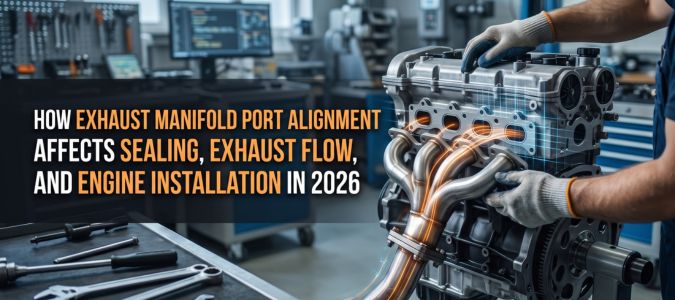
How Exhaust Manifold Port Alignment Affects Sealing, Exhaust Flow, and Engine Installation in 2026
Replacing a vehicle’s engine requires more than matching its displacement and model year. Exhaust manifold compatibility, port alignment, and gasket positioning can influence installation quality, exhaust sealing, and engine performance. Buyers comparing used engines for sale should consider these details before purchasing a replacement powertrain. Similarly, drivers searching for a salvage yard near me should verify that the available engine matches their vehicle’s specifications and can accommodate the existing exhaust manifold or the correct replacement component.
What Is Engine Exhaust Manifold Port Alignment?
The exhaust manifold collects exhaust gases from the engine’s cylinders and directs them toward the exhaust system. Its ports must align correctly with the exhaust openings in the cylinder head to create an appropriate sealing surface and allow gases to flow as designed.
Port alignment depends on several factors, including cylinder-head design, engine configuration, manifold shape, gasket dimensions, and mounting-hole locations. Even engines with similar displacement may use different exhaust manifolds or cylinder-head layouts.
When installing a replacement engine, technicians should verify the relevant part numbers and specifications rather than assuming that the original manifold will fit every engine within the same model family.
Why Port Alignment Matters for Exhaust Sealing
The exhaust manifold gasket forms a seal between the manifold and cylinder head. Proper alignment helps the gasket sit correctly against the intended sealing surfaces.
If the ports, mounting holes, or gasket openings do not match, the gasket may not seal as intended. Incorrect installation, damaged surfaces, or uneven fastener tightening can also contribute to exhaust leaks. Potential warning signs include:
- A ticking or tapping noise that is more noticeable during a cold start.
- Visible soot marks around the manifold joint.
- An exhaust smell near the engine compartment.
- Damaged or deteriorated manifold gaskets.
- Fasteners that are loose, damaged, or difficult to install correctly.
These symptoms can have other causes, so a qualified technician should inspect the exhaust system before identifying the source of a leak.
How Port Alignment Influences Exhaust Flow
Exhaust manifolds are designed to collect and direct gases from the cylinders into the exhaust system. Correctly matched ports help maintain the intended flow path and reduce unwanted restrictions caused by incompatible components.
A significant mismatch between manifold and cylinder-head ports can create an abrupt change in the flow path. However, a visible difference in port size does not automatically mean that performance will suffer. Engine design, manifold geometry, exhaust tuning, and operating conditions all influence the actual result.
For replacement engine installations, the priority should be to use compatible components that meet the manufacturer’s specifications. Enlarging or modifying ports without appropriate engineering guidance can compromise sealing surfaces and may not improve performance.
Compatibility Checks Before Buying Used Engines for Sale
When evaluating used engines for sale, buyers should confirm more than the engine’s advertised name or displacement. Exhaust manifold compatibility is one of several details that can affect installation time and additional parts costs.
Before purchasing, check the following:
- Engine identification: Compare the engine code, vehicle application, model year, and relevant identification numbers with the manufacturer’s fitment information.
- Cylinder-head configuration: Verify that the replacement engine uses compatible cylinder heads, exhaust port locations, and manifold mounting points.
- Manifold and gasket specifications: Confirm whether the original manifold can be reused or whether the replacement engine requires a different manifold or gasket.
- Emissions equipment: Check compatibility with the vehicle’s required emissions components, oxygen sensors, and exhaust connections.
- Condition of sealing surfaces: Ask whether the manifold mounting surfaces have been inspected for cracks, corrosion, warping, or other damage.
These checks help reduce the likelihood of discovering fitment problems after the engine has been delivered or installed.
What to Check When Searching for a Salvage Yard Near Me
A search for a salvage yard near me can help identify local sources of replacement engines, but availability alone should not determine the purchase. Ask the supplier for the engine code, donor vehicle details where available, mileage information if documented, and any inspection records. Request clear photographs of the engine identification label and relevant mounting areas when an in-person inspection is not possible.
Confirm whether the supplier provides a written warranty, what it covers, and whether there are requirements for professional installation. Also clarify the return policy if the engine proves incompatible with the vehicle.
A reputable supplier should be able to explain what is known about the engine’s condition without making unsupported guarantees. Salvage-yard engines can vary considerably in history and condition, so documentation and compatibility verification remain important.
Installation Practices That Help Prevent Exhaust Leaks
Before installation, a technician should inspect the exhaust manifold and cylinder-head sealing surfaces. Damaged gaskets should be replaced, and any surface irregularities should be evaluated according to manufacturer specifications.
The manifold must be positioned correctly, with all fasteners starting smoothly and the gasket aligned with the relevant ports. Fasteners should be tightened in the specified sequence and to the correct torque. Over-tightening can damage threads or distort components.
After installation, the exhaust system should be inspected for leaks using an appropriate procedure. If an exhaust leak is suspected, it should be addressed promptly because hot exhaust gases can damage nearby components and may create safety concerns.
Final Thoughts
Exhaust manifold port alignment is an important detail in replacement engine compatibility. Correct matching supports proper gasket placement, dependable sealing, and the intended exhaust flow path.
When comparing used engines for sale or researching a salvage yard near me, buyers should verify engine identification, cylinder-head configuration, manifold fitment, emissions compatibility, and warranty conditions before committing to a purchase. Careful preparation helps minimize installation complications and supports reliable vehicle operation.