
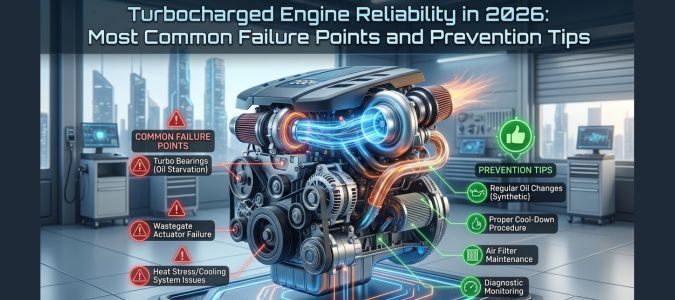
Turbocharged Engine Reliability in 2026: Most Common Failure Points and Prevention Tips
Turbocharged engines have become the standard powertrain choice for many modern vehicles in 2026. Automakers continue to rely on turbocharging technology to deliver improved fuel efficiency, increased horsepower, and lower emissions without increasing engine size. From compact sedans and crossovers to pickup trucks and performance vehicles, turbocharged engines now dominate much of the automotive market.
While modern turbocharged engines are more advanced and reliable than earlier generations, they still face unique maintenance challenges. Because these engines operate under higher temperatures and pressures than naturally aspirated engines, certain components are more susceptible to wear and failure over time.
Understanding the most common failure points and learning how to prevent them can help vehicle owners avoid expensive repairs. In cases where major repairs become necessary, many drivers turn to OEM used auto parts and used engines with warranty coverage to reduce costs while maintaining dependable performance.
Why Turbocharged Engines Are So Popular
Turbochargers use exhaust gases to force additional air into the engine’s combustion chamber.
This process allows smaller engines to produce power levels similar to larger engines while offering:
- Improved fuel economy
- Higher torque output
- Reduced emissions
- Better performance
- Enhanced driving experience
Despite these benefits, turbocharged systems place additional stress on engine components.
How Turbochargers Affect Engine Reliability
A turbocharger operates at extremely high speeds, often exceeding:
- 150,000 RPM
- 200,000 RPM in some applications
Additionally, turbocharged engines generate significantly higher operating temperatures.
These demanding conditions can accelerate wear if maintenance is neglected.
Fortunately, most failures are preventable when drivers follow proper service practices.
Common Failure Point #1: Turbocharger Bearing Wear
Turbocharger bearings are among the most vulnerable components.
The turbo shaft relies on a constant supply of clean engine oil for lubrication.
Common causes of bearing failure include:
- Dirty oil
- Low oil levels
- Delayed oil changes
- Oil contamination
Warning Signs
Drivers may notice:
- Whining noises
- Reduced acceleration
- Excessive exhaust smoke
- Loss of boost pressure
Prevention Tips
- Follow manufacturer oil change intervals
- Use recommended oil grades
- Check oil levels regularly
Proper lubrication remains the most important factor in turbocharger longevity.
Common Failure Point #2: Oil Supply Problems
Turbochargers depend entirely on uninterrupted oil flow.
Restricted oil passages can lead to:
- Bearing damage
- Increased friction
- Turbo overheating
- Premature failure
Oil sludge buildup is a common culprit, particularly in high-mileage engines.
Prevention Tips
- Use high-quality synthetic oil
- Replace oil filters regularly
- Avoid extended service intervals
Consistent maintenance helps protect both the engine and turbocharger.
Common Failure Point #3: Intercooler Leaks
Most turbocharged vehicles use an intercooler to cool compressed intake air.
Over time, intercoolers may develop:
- Cracks
- Hose leaks
- Seal failures
These issues reduce boost efficiency and overall engine performance.
Symptoms
- Loss of power
- Increased fuel consumption
- Check engine lights
- Reduced acceleration
Prevention Tips
Regular inspections can identify leaks before performance suffers significantly.
Common Failure Point #4: Carbon Buildup
Direct-injection turbocharged engines are especially susceptible to carbon deposits.
Carbon buildup commonly affects:
- Intake valves
- Combustion chambers
- Airflow passages
Excessive deposits can reduce efficiency and performance.
Warning Signs
- Rough idle
- Hesitation during acceleration
- Reduced fuel economy
- Engine misfires
Prevention Tips
- Use quality fuel
- Follow maintenance schedules
- Perform periodic intake cleaning when recommended
Common Failure Point #5: Cooling System Issues
Turbocharged engines generate substantial heat. Cooling system failures can quickly lead to:
- Engine overheating
- Turbo damage
- Head gasket failure
- Internal engine wear
Common cooling system problems include:
- Coolant leaks
- Failed water pumps
- Blocked radiators
- Faulty thermostats
Prevention Tips
Maintain coolant levels and inspect cooling system components regularly.
Common Failure Point #6: Wastegate Malfunctions
The wastegate controls turbocharger boost pressure.
When wastegates fail, drivers may experience:
- Overboost conditions
- Reduced performance
- Engine warning lights
- Inconsistent acceleration
Modern electronically controlled wastegates add complexity and increase potential failure points.
Prevention Tips
Routine diagnostics can identify wastegate issues before major damage occurs.
Common Failure Point #7: Spark Plug and Ignition Problems
Turbocharged engines place greater demands on ignition systems.
Worn spark plugs may cause:
- Misfires
- Poor fuel economy
- Rough acceleration
- Reduced power
Prevention Tips
Replace spark plugs according to manufacturer recommendations and inspect ignition components during routine maintenance.
Why Turbocharger Repairs Are Increasing in 2026
Several industry trends contribute to rising turbocharger-related repairs.
Smaller Engines Producing More Power
Manufacturers continue downsizing engines while increasing turbocharger output.
This places additional stress on internal components.
Longer Vehicle Lifespans
Many vehicles now exceed:
- 150,000 miles
- 200,000 miles
Higher mileage naturally increases wear on turbocharged systems.
Increased Urban Driving
Frequent stop-and-go traffic creates repeated heat cycles that accelerate component wear.
What Happens If Turbo Failure Is Ignored?
Ignoring turbocharger problems can result in severe engine damage.
Potential consequences include:
- Oil contamination
- Engine overheating
- Piston damage
- Cylinder wall scoring
- Complete engine failure
Early diagnosis can prevent costly repairs.
The Role of OEM Used Auto Parts in Repairs
When turbocharged engine components require replacement, many vehicle owners choose OEM used auto parts.
Benefits include:
- Original manufacturer quality
- Proper fitment
- Lower costs than new parts
- Proven compatibility
OEM components often provide a reliable and cost-effective repair solution.
Why Drivers Choose Used Engines With Warranty
In severe cases, turbocharger failure can damage the entire engine.
When replacement becomes necessary, many owners seek used engines with warranty coverage.
Advantages include:
- Lower Replacement Costs: Used engines are often significantly less expensive than factory-new options.
- Warranty Protection: Coverage provides added confidence and financial security.
- OEM Reliability: Original manufacturer engines maintain factory performance standards.
- Faster Availability: Many used engines are available immediately, reducing vehicle downtime.
Best Practices for Turbocharged Engine Longevity
Drivers can significantly extend engine life by following a few key maintenance practices.
- Change Oil Frequently: Clean oil is essential for turbocharger health.
- Allow Proper Warm-Up: Avoid aggressive acceleration before the engine reaches operating temperature.
- Cool Down After Heavy Driving: Allow the engine to idle briefly after towing or high-performance driving.
- Monitor Warning Lights: Address diagnostic alerts promptly.
- Follow Scheduled Maintenance: Routine inspections help identify issues before they become major repairs.
The Future of Turbocharged Engine Reliability
Manufacturers continue introducing technologies designed to improve durability.
Emerging advancements include:
- Smart oil monitoring systems
- AI-powered diagnostics
- Enhanced cooling systems
- Improved turbocharger materials
- Predictive maintenance software
These innovations are expected to improve reliability and reduce repair frequency in future models.
Final Thoughts
Turbocharged engines offer an excellent combination of performance, efficiency, and driving enjoyment. However, their higher operating temperatures and increased mechanical demands make proper maintenance essential.
Understanding common failure points such as turbocharger bearing wear, oil supply issues, cooling system failures, carbon buildup, and wastegate problems can help drivers avoid costly repairs. When repairs become necessary, OEM used auto parts provide a dependable and budget-friendly solution. For major engine replacements, used engines with warranty coverage offer a practical way to restore vehicle performance while controlling expenses.
With proper care and proactive maintenance, turbocharged engines can deliver reliable service well beyond 200,000 miles in 2026 and beyond.