
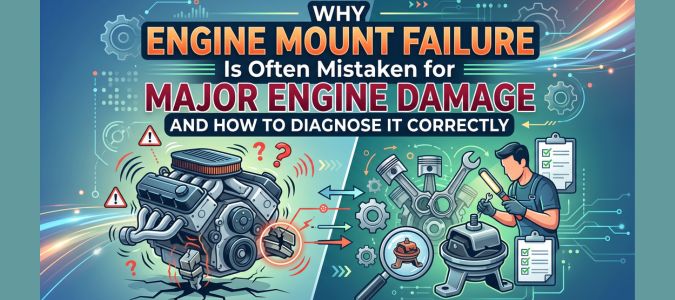
Why Engine Mount Failure Is Often Mistaken for Major Engine Damage and How to Diagnose It Correctly
Engine mounts are designed to secure the engine while absorbing vibrations and movement. When they wear out or fail, they can produce noises, vibrations, and harsh movements that closely resemble serious engine problems. Before assuming your vehicle needs a replacement engine, a proper diagnosis is essential. If an engine replacement is ultimately required, professionally inspected used engines and quality used engines offer reliable and cost-effective solutions.
Table of Contents
- What are engine mounts?
- Why engine mount failure is often misdiagnosed
- Common symptoms of bad engine mounts
- How to diagnose engine mount problems
- When the engine is actually at fault
- Choosing the right replacement engine
- FAQs
What Are Engine Mounts?
Engine mounts are heavy-duty components that connect the engine and transmission to the vehicle’s frame or subframe. They are typically made from metal brackets combined with rubber or hydraulic materials that absorb vibration.
Their primary functions include:
- Supporting engine weight
- Reducing engine vibration
- Limiting engine movement
- Improving driving comfort
- Protecting surrounding components
Without properly functioning engine mounts, even a healthy engine can feel rough and unstable.
Why Engine Mount Failure Is Commonly Misdiagnosed
Many of the symptoms caused by worn engine mounts closely resemble those of internal engine problems.
Drivers may assume they have:
- Engine bearing failure
- Misfires
- Transmission issues
- Internal engine damage
- Drivetrain problems
In reality, deteriorated engine mounts may be the actual cause.
Because the symptoms overlap, professional inspection is important before deciding on major repairs.
Common Signs of Failing Engine Mounts
Recognizing early warning signs can help prevent unnecessary repairs.
Excessive Engine Vibration
One of the most noticeable symptoms is increased vibration felt inside the cabin.
The vibration may be most noticeable:
- While idling
- During acceleration
- When stopped at traffic lights
Healthy engine mounts normally absorb much of this movement.
Clunking or Knocking Noises
A damaged mount may allow the engine to shift excessively during acceleration or braking.
This movement can produce:
- Clunking sounds
- Thumping noises
- Metallic impacts
These sounds are sometimes mistaken for serious internal engine failures.
Visible Engine Movement
If the mounts have deteriorated significantly, the engine may move excessively when changing gears or accelerating.
Excessive engine movement places additional stress on:
- Exhaust components
- Cooling hoses
- Wiring harnesses
- Drivetrain connections
Harsh Gear Changes
Because the transmission is connected to the engine assembly, worn mounts may affect shifting quality.
Drivers may notice:
- Rough gear engagement
- Jerking during acceleration
- Increased drivetrain movement
These symptoms often resemble transmission problems.
How to Diagnose Engine Mount Failure
Proper diagnosis prevents unnecessary engine replacement.
A technician may inspect:
Visual Condition
Rubber sections may show:
- Cracks
- Separation
- Fluid leakage (hydraulic mounts)
- Compression damage
Any of these conditions indicate the mount may need replacement.
Engine Movement Test
During a controlled inspection, technicians observe engine movement while shifting between drive and reverse.
Excessive movement often indicates worn or broken mounts.
Road Test
Driving the vehicle under various conditions helps identify whether noises occur:
- During acceleration
- While braking
- During gear changes
- At idle
This information assists in distinguishing mount failure from internal engine problems.
When the Engine Is Actually the Problem
Although engine mounts frequently cause vibration and noise, some symptoms do point toward genuine engine damage.
Examples include:
- Persistent knocking from inside the engine
- Low oil pressure
- Excessive oil consumption
- Blue exhaust smoke
- Low compression
- Severe overheating
These conditions require further mechanical inspection before determining the best repair option.
Why Accurate Diagnosis Saves Money
Replacing an engine unnecessarily can become one of the most expensive automotive mistakes.
Correct diagnosis may reveal that replacing inexpensive engine mounts restores:
- Smooth operation
- Comfortable driving
- Reduced vibration
- Proper drivetrain alignment
Investing in professional diagnostics often prevents thousands of dollars in unnecessary repairs.
When Engine Replacement Becomes Necessary
If inspection confirms major internal engine damage, replacement may be more practical than rebuilding.
Many vehicle owners choose professionally inspected used engines because they provide:
- Lower replacement costs
- OEM engineering
- Faster installation
- Reliable compatibility
Used replacement engines often offer excellent value when purchased from reputable suppliers.
Why Quality Used Engines Are a Smart Investment
Professionally tested quality used engines are carefully inspected before resale.
Many benefits include:
- Verified mileage
- Compression testing
- Factory-built reliability
- Warranty availability
- Cost-effective repairs
Engines removed from collision-damaged vehicles frequently have many years of useful service remaining.
Choosing a Reliable Supplier
When purchasing a replacement engine, look for suppliers that offer:
- Vehicle compatibility verification
- Inspection reports
- Mileage documentation
- Warranty options
- Technical support
Buying from experienced suppliers improves confidence in the replacement engine.
Final Thoughts
Engine mount failure is one of the most commonly misunderstood automotive problems because its symptoms closely resemble serious engine or transmission issues. Excessive vibration, clunking noises, rough shifting, and noticeable engine movement often originate from worn mounts rather than internal engine damage.
Before investing in major repairs, a professional inspection can determine whether simple mount replacement will solve the problem. If engine replacement is truly necessary, professionally inspected used engines and quality used engines provide dependable, affordable alternatives that help restore vehicle performance while avoiding the high cost of brand-new powertrains.
FAQs
Yes. Worn engine mounts often cause vibration, noise, and excessive movement that can closely resemble serious engine problems.
Common symptoms include excessive vibration, clunking noises, rough shifting, engine movement, and increased cabin vibration during acceleration or idling.
Engine replacement becomes a practical option when severe internal damage such as low compression, bearing failure, or major overheating makes repairs uneconomical.
Professionally inspected used engines from reputable suppliers often provide dependable performance and significant cost savings compared to new engines.
Quality used engines typically undergo testing, mileage verification, and inspection, making them a reliable and economical choice for long-term vehicle repairs.