
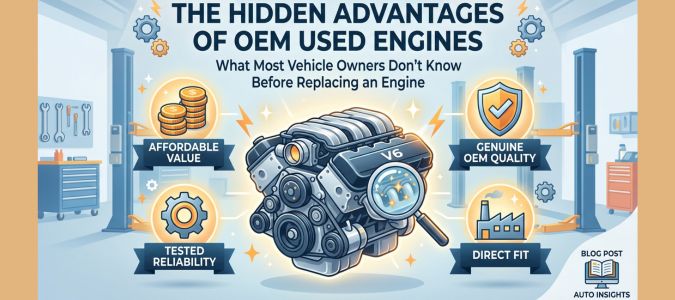
The Hidden Advantages of OEM Used Engines: What Most Vehicle Owners Don’t Know Before Replacing an Engine
Engine failure is one of the most expensive problems a vehicle owner can face. When an engine reaches the point where repairs are no longer practical, many drivers immediately assume that purchasing a brand-new engine-or even replacing the entire vehicle-is the only solution. However, there is another option that is gaining popularity in 2026: OEM used engines.
Many consumers overlook the benefits of OEM used auto parts because they are unfamiliar with the quality standards, cost savings, and long-term value these components can provide. In reality, professionally inspected quality used engines often offer an excellent balance of affordability, reliability, and performance.
Before making a major engine replacement decision, it’s important to understand the hidden advantages that many vehicle owners discover only after exploring the OEM used engine market.
What Is an OEM Used Engine?
OEM stands for Original Equipment Manufacturer.
An OEM used engine is an original factory-installed engine removed from a vehicle that is no longer being used.
These engines often come from:
- Accident-damaged vehicles
- Insurance write-offs
- Fleet retirements
- Salvage auctions
In many cases, the vehicle may be severely damaged while the engine remains in excellent working condition.
Because these are genuine OEM used auto parts, they are built to the exact specifications established by the manufacturer.
Factory Engineering You Can Trust
One of the greatest advantages of OEM components is compatibility.
OEM engines offer:
- Exact fitment
- Factory performance standards
- Original design specifications
- Proven reliability
Unlike some aftermarket alternatives, OEM engines are designed specifically for the vehicle in which they are installed.
This reduces installation challenges and helps maintain consistent performance.
Significant Cost Savings
Perhaps the most obvious advantage is affordability. Replacing an engine with a new factory unit can be extremely expensive.
Costs may include:
- New engine purchase
- Labor charges
- Programming requirements
- Additional replacement parts
By comparison, quality used engines often cost significantly less while delivering dependable service.
For many vehicle owners, these savings make the difference between repairing a vehicle and replacing it altogether.
Modern Engines Last Longer Than Ever
Many drivers underestimate the lifespan of today’s engines. Modern powertrains frequently exceed:
- 200,000 miles
- 250,000 miles
- 300,000 miles
when properly maintained.
A low-mileage OEM used engine may therefore retain a substantial amount of useful life. This hidden value makes used engines particularly attractive for long-term ownership.
Faster Availability Than New Engines
Supply chain disruptions continue to affect automotive parts availability in 2026. New engine orders may involve:
- Long lead times
- Shipping delays
- Inventory shortages
OEM used engines are often readily available through reputable suppliers.
Faster sourcing means:
- Reduced vehicle downtime
- Quicker repairs
- Faster return to normal transportation
For many drivers, this convenience is a major benefit.
Better Value for Older Vehicles
When an older vehicle experiences engine failure, owners often struggle to justify the cost of a brand-new engine.
In many situations:
- The vehicle body remains in good condition
- The transmission functions properly
- The suspension remains serviceable
Installing a quality used engine can restore reliability without exceeding the vehicle’s overall value.
This helps maximize the return on the owner’s original investment.
OEM Used Auto Parts Support Sustainability
Environmental concerns continue influencing consumer decisions.
Choosing OEM used auto parts helps support automotive recycling by:
- Reducing landfill waste
- Conserving raw materials
- Lowering manufacturing demand
- Extending component life cycles
Vehicle owners can save money while contributing to more sustainable repair practices.
Improved Quality Control Standards
The used engine industry has evolved significantly.
Today, reputable suppliers often perform:
- Compression testing
- Visual inspections
- Mileage verification
- Leak detection
- Operational evaluations
These quality control procedures help ensure that engines meet reliability expectations before sale.
As a result, buyers can shop with greater confidence.
Warranty Coverage Is More Common
One common misconception is that used engines come with no protection.
Many suppliers now offer:
- Limited warranties
- Extended coverage options
- Performance guarantees
Warranty programs provide additional reassurance and reduce purchasing risk.
This has contributed significantly to the growing popularity of quality used engines.
OEM Components Preserve Vehicle Integrity
Modern vehicles rely on complex electronic systems.
OEM engines are designed to integrate seamlessly with:
- Engine control modules
- Emissions systems
- Fuel management systems
- Vehicle diagnostics
This compatibility helps preserve factory performance and reduces the likelihood of operational issues after installation.
Lower Insurance and Ownership Costs
Purchasing a replacement vehicle often leads to:
- Higher insurance premiums
- Increased registration fees
- New financing obligations
Replacing the engine instead allows owners to continue driving a familiar vehicle while avoiding these additional expenses.
The long-term savings can be substantial.
Growing Acceptance Among Repair Professionals
Automotive repair facilities increasingly recommend OEM used engines because they offer:
- Proven reliability
- Cost-effective solutions
- OEM compatibility
- Faster sourcing
Many professional technicians recognize that a properly inspected OEM engine can deliver excellent results for customers.
Technology Makes Engine Selection Easier
Modern inventory systems help suppliers quickly locate compatible engines.
Advanced databases verify:
- Vehicle fitment
- Engine codes
- Mileage records
- Availability
This technology simplifies the purchasing process and reduces compatibility concerns.
Fleet Operators Have Already Embraced Used Engines
Commercial fleets often lead industry trends.
Many fleet operators use OEM replacement engines because they provide:
- Lower operating costs
- Extended vehicle lifespan
- Improved asset utilization
Their continued adoption demonstrates the practical value of recycled OEM components.
Common Misconceptions About Used Engines
Some drivers still believe that used engines are unreliable.
In reality, professionally sourced engines often provide:
- Verified mileage
- Inspection reports
- Warranty coverage
- OEM performance standards
These factors make modern used engines far different from the outdated perceptions many consumers still hold.
How to Choose a Quality Used Engine
Before making a purchase, buyers should review:
- Mileage history
- Inspection documentation
- Warranty terms
- Supplier reputation
- Compatibility information
Careful evaluation helps ensure a successful engine replacement experience.
Future Demand for OEM Used Engines
Industry experts expect demand for OEM used auto parts to continue increasing due to:
- Rising repair costs
- Increasing vehicle prices
- Sustainability initiatives
- Longer vehicle ownership cycles
These trends position OEM used engines as a major part of the future automotive repair market.
Final Thoughts
Many vehicle owners are unaware of the substantial advantages that OEM used engines can offer. From significant cost savings and faster availability to environmental benefits and proven factory compatibility, these engines provide a compelling alternative to expensive new replacements.
By choosing professionally inspected OEM used auto parts and quality used engines, drivers can restore vehicle performance, extend ownership, and avoid unnecessary financial strain. As repair costs continue rising in 2026, OEM used engines are proving to be one of the smartest and most practical solutions available for engine replacement.