
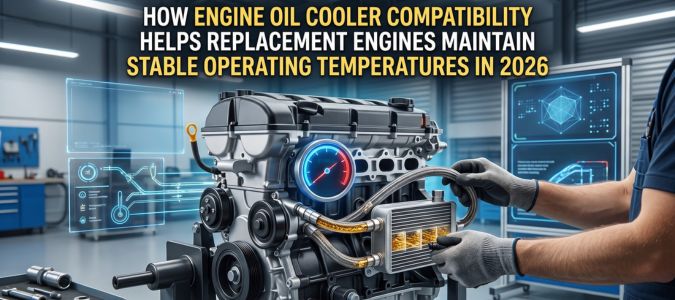
How Engine Oil Cooler Compatibility Helps Replacement Engines Maintain Stable Operating Temperatures in 2026
Engine temperature management is essential for maintaining reliable vehicle performance. Modern engines generate significant heat during combustion, acceleration, towing, highway driving, and stop-and-go traffic. The engine oil plays an important role in lubricating internal components while also helping carry heat away from critical areas.
An engine oil cooler can provide additional temperature control by transferring heat from engine oil to coolant or airflow. However, the effectiveness of an oil cooler depends heavily on compatibility with the engine, cooling system, oil circuit, and vehicle configuration.
In 2026, replacement engine buyers are paying greater attention to component compatibility rather than focusing only on engine mileage or price. Drivers looking for quality used engines should verify that the oil cooler and related components are suitable for the replacement engine. Similarly, customers considering used transmissions with warranty should understand that transmission cooling and engine oil cooling systems can have different requirements and should be evaluated separately.
What Is an Engine Oil Cooler?
An engine oil cooler is a heat exchanger designed to help regulate engine oil temperature.
Engine oil absorbs heat as it circulates through the engine. If oil temperatures become excessively high, the lubricant can lose some of its ability to protect internal components.
An oil cooler can help transfer excess heat through:
- Engine coolant
- Ambient airflow
- Dedicated cooling circuits
The exact design depends on the vehicle and engine configuration.
Why Engine Oil Temperature Matters
Engine oil must operate within an appropriate temperature range to provide effective lubrication. Excessive oil temperatures can contribute to:
- Faster oil degradation
- Reduced lubrication performance
- Increased component wear
- Deposits
- Thermal stress
Extremely low oil temperatures can also affect lubrication efficiency and moisture evaporation. Maintaining stable operating temperatures is therefore an important part of long-term engine reliability.
How Oil Cooler Compatibility Affects Performance
Not every oil cooler is suitable for every engine. Compatibility can depend on:
- Engine model
- Engine code
- Oil flow requirements
- Mounting configuration
- Oil pressure
- Coolant connections
- Hose dimensions
- Thermal specifications
Installing an incompatible cooler may reduce cooling effectiveness or create leaks and installation problems.
Replacement Engine Compatibility
When replacing an engine, technicians should verify whether the replacement unit uses the same oil cooler configuration as the original engine.
Differences may exist between:
- Model years
- Engine variants
- Trim levels
- Market specifications
- Emissions configurations
- Performance versions
A visually similar oil cooler may not necessarily have the correct flow rate, mounting points, or connections.
Choosing Quality Used Engines
Buyers searching for quality used engines should evaluate the complete engine configuration.
Important considerations include:
- Exact engine code
- Vehicle compatibility
- Mileage
- Inspection results
- Cooling system configuration
- Oil cooler compatibility
- Maintenance history
- Warranty coverage
A reliable replacement engine should be matched with supporting components that meet the vehicle’s specifications.
Oil Cooler Connections and Leak Prevention
Compatibility is particularly important when connecting oil cooler lines. Incorrect fittings or hoses can lead to:
- Oil leaks
- Coolant leaks
- Poor oil circulation
- Reduced cooling
- Installation complications
Technicians should inspect seals, gaskets, fittings, and connection points during installation.
Oil Coolers and High-Load Driving
Oil cooling becomes particularly important during demanding operating conditions. Examples include:
- Towing
- Heavy loads
- Long highway trips
- High ambient temperatures
- Performance driving
- Frequent stop-and-go traffic
During these conditions, engine oil may experience increased thermal stress. A properly matched oil cooler can help manage oil temperature more effectively.
Relationship Between Engine and Transmission Cooling
Engine oil cooling and transmission fluid cooling are separate systems, although some vehicles use integrated heat exchangers.
Transmission fluid also requires appropriate temperature management. Excessive transmission temperatures can affect:
- Fluid condition
- Clutch components
- Valve-body operation
- Gear shifting
- Transmission durability
This is one reason buyers considering used transmissions with warranty should also verify the appropriate transmission cooling arrangement for their vehicle.
Used Transmissions With Warranty
When purchasing used transmissions with warranty, buyers should confirm:
- Transmission compatibility
- Vehicle application
- Mileage
- Inspection procedures
- Warranty duration
- Covered components
- Installation requirements
- Fluid specifications
A warranty can provide additional protection according to the supplier’s stated terms, but it does not eliminate the need for proper installation and cooling-system verification.
Importance of Coolant Quality
For oil-to-coolant heat exchangers, coolant condition can influence thermal performance. Old, contaminated, or incorrect coolant may reduce cooling-system efficiency.
During an engine replacement, technicians may inspect:
- Coolant condition
- Radiator
- Thermostat
- Water pump
- Coolant hoses
- Heat exchangers
Maintaining the entire cooling system supports stable engine temperatures.
Oil Cooler Maintenance
Oil coolers generally require less routine attention than engine oil itself, but they should still be inspected when problems occur.
Potential warning signs include:
- Oil leaks
- Coolant contamination
- Unusual oil temperatures
- Damaged hoses
- Corrosion
- External impact damage
Regular vehicle inspections can help identify problems before they cause significant damage.
Role of Engine Oil Selection
Even the best cooling system cannot compensate for incorrect engine oil. The oil should meet the vehicle manufacturer’s specifications for:
- Viscosity
- Performance standard
- Engine application
- Temperature range
Using the correct lubricant helps maintain proper lubrication and thermal performance.
Importance of Professional Installation
Oil cooler installation requires careful attention to:
- Correct fittings
- Seals
- Torque specifications
- Oil lines
- Coolant connections
- Oil level
- Coolant level
After installation, technicians should inspect the system for leaks and verify normal operating temperatures.
Future of Engine Thermal Management
Thermal management systems are becoming increasingly sophisticated. Future replacement engines may incorporate:
- Electronically controlled oil cooling
- Variable-flow pumps
- Smart temperature sensors
- Predictive thermal management
- Integrated cooling modules
- ECU-controlled temperature optimization
These systems can help engines maintain more consistent operating conditions under changing loads.
Final Thoughts
Engine oil cooler compatibility is an important consideration when installing a replacement engine in 2026. The correct oil cooler can help maintain stable oil temperatures, support effective lubrication, and protect internal engine components during demanding operating conditions.
Buyers searching for quality used engines should verify engine specifications, cooling-system configuration, oil cooler compatibility, and inspection information before purchasing. Compatibility should always be evaluated based on the complete vehicle configuration rather than appearance alone.
For customers considering used transmissions with warranty, transmission cooling requirements should also be confirmed separately. A suitable transmission, appropriate cooling system, professional installation, and correct fluid can all contribute to long-term gearbox reliability.
Ultimately, effective thermal management depends on the entire powertrain working together. Proper component matching, routine maintenance, correct fluids, and professional installation can help replacement engines and transmissions deliver dependable performance throughout their service life.
Frequently Asked Questions
An engine oil cooler transfers excess heat from engine oil to coolant or airflow, helping maintain appropriate oil temperatures during vehicle operation.
An oil cooler must match the engine’s oil flow, pressure, mounting, fittings, and thermal requirements. An incompatible cooler may cause leaks or inadequate cooling.
When purchasing quality used engines, verify the engine code, vehicle compatibility, mileage, inspection records, cooling configuration, oil cooler compatibility, and warranty terms.
Transmission cooling and engine oil cooling are generally separate systems, although some vehicles use integrated heat exchangers. Buyers should verify the cooling requirements for both systems.
An oil cooler primarily helps control engine oil temperature. It is not a replacement for the vehicle’s primary coolant-based engine cooling system.
Yes. Inspecting the oil cooler, hoses, fittings, seals, and related cooling components during engine replacement can help identify potential leaks or compatibility issues before the vehicle returns to service.