
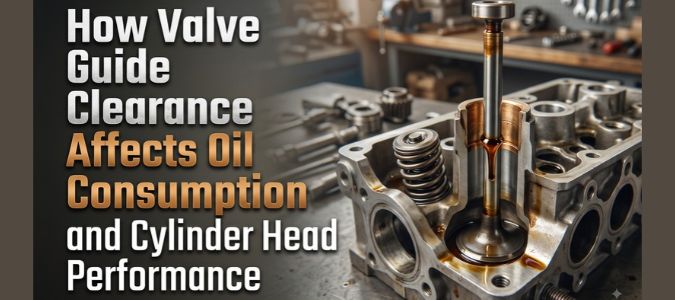
How Valve Guide Clearance Affects Oil Consumption and Cylinder Head Performance
Engine valve guides play an important role in maintaining proper valve movement and controlling oil consumption. They support the valve stem as it moves up and down during the opening and closing cycles, helping maintain alignment with the valve seat. The clearance between the valve stem and its guide must remain within the engine manufacturer’s specifications. Excessive or insufficient clearance can affect lubrication, valve movement, combustion efficiency, and cylinder head performance.
When evaluating quality used engines, technicians should pay attention to valve guide condition because excessive wear can contribute to oil consumption, smoke from the exhaust, and inconsistent engine operation. Understanding valve guide clearance also helps buyers make better decisions when comparing different used engines for replacement.
What Is Valve Guide Clearance?
Valve guide clearance refers to the small space between the outside diameter of the valve stem and the inside diameter of the valve guide. This clearance allows the valve to move smoothly while maintaining the alignment required for proper seating.
Engine oil provides lubrication between these components, reducing friction and wear during operation. However, the clearance must be controlled carefully.
If the gap becomes excessive, the valve may move sideways inside the guide. If the clearance is too tight, insufficient operating space can increase friction and potentially cause valve sticking, particularly as components expand with heat.
The correct clearance varies according to engine design, valve material, guide material, and operating requirements.
How Excessive Valve Guide Clearance Increases Oil Consumption
One of the main consequences of worn valve guides is increased oil movement into the combustion chamber. When clearance becomes excessive, engine oil can travel along the valve stem more easily. Valve stem seals are designed to regulate the amount of oil reaching the guide area, but worn guides can make effective oil control more difficult.
Oil entering the combustion chamber burns along with the air-fuel mixture and may produce blue or blue-gray exhaust smoke. Other possible symptoms include:
- Gradually decreasing engine oil levels
- Increased oil consumption between services
- Deposits forming on spark plugs
- Carbon accumulation on valves and combustion surfaces
- Exhaust smoke during certain operating conditions
These symptoms are not exclusive to valve guide wear. Worn piston rings, cylinder damage, turbocharger problems, and defective valve stem seals can produce similar issues.
How Valve Guide Wear Affects Cylinder Head Performance
Valve guides help maintain the alignment between the valve and its seat. When guide clearance becomes excessive, the valve may not remain properly centered during operation. This can affect how consistently the valve contacts its seat. Poor seating may contribute to compression leakage, uneven heat transfer, and accelerated wear.
Several performance problems may develop:
- Reduced sealing efficiency: A misaligned valve may not contact its seat evenly, potentially allowing combustion gases to escape.
- Uneven valve wear: Excessive side movement can increase wear on the valve stem, guide, and valve seat.
- Poor heat transfer: Exhaust valves transfer a significant amount of heat through their seating surfaces. Incorrect alignment may interfere with effective heat transfer.
- Unstable engine operation: If valve sealing becomes inconsistent, the engine may experience reduced compression, rough running, or performance loss.
These issues can become more serious if guide wear remains unaddressed.
Common Causes of Valve Guide Clearance Problems
Valve guide clearance can increase gradually or develop prematurely due to several mechanical conditions.
- Normal Mechanical Wear: Continuous valve movement creates friction between the valve stem and guide. Over time, this interaction can enlarge the clearance, particularly in engines with high operating hours or mileage.
- Inadequate Lubrication: Poor oil quality, insufficient lubrication, or restricted oil supply can increase friction and accelerate wear in valve train components.
- Excessive Operating Temperatures: Repeated overheating can place additional stress on cylinder head components. Depending on the engine design and materials, excessive temperatures may contribute to dimensional changes and accelerated wear.
- Incorrect Previous Repairs: Improper guide installation, unsuitable replacement components, or inaccurate machining can create clearance problems even after cylinder head servicing.
How Technicians Measure Valve Guide Clearance
Accurate measurement is necessary to determine whether valve guides remain suitable for continued operation. Technicians generally follow these inspection steps:
- Remove the cylinder head according to the manufacturer’s service procedure.
- Clean the valve stems and guide openings.
- Inspect the valve stems for scoring, wear, and damage.
- Measure the valve stem diameter using suitable precision measuring equipment.
- Measure the guide inside diameter using an appropriate bore gauge.
- Calculate the clearance and compare it with manufacturer specifications.
If measurements exceed the permitted limits, the guide may require replacement, reconditioning, or another approved repair. Both the valve and guide must be inspected because replacing only one worn component may not restore the correct clearance.
Why Valve Guide Inspection Matters When Buying Used Engines
Buyers searching for quality used engines should consider the condition of the cylinder head and valve train, not just the engine’s exterior appearance. A replacement engine may look clean while containing internal wear that affects oil consumption and performance.
Before purchasing used engines, buyers should ask about available inspection records, compression or leak-down test results, oil consumption history, and previous cylinder head repairs. A seller’s warranty terms should also be reviewed carefully. Coverage, exclusions, installation requirements, and claim procedures vary between suppliers.
Final Thoughts
Valve guide clearance is an important factor in controlling engine oil consumption and maintaining cylinder head performance. Excessive clearance can allow additional oil to enter the combustion chamber, affect valve alignment, and contribute to sealing problems.
For buyers comparing quality used engines and other used engines, understanding valve guide condition can help identify potential internal wear before installation. Proper measurement, manufacturer-approved repair procedures, and a detailed inspection contribute to more dependable engine performance.