
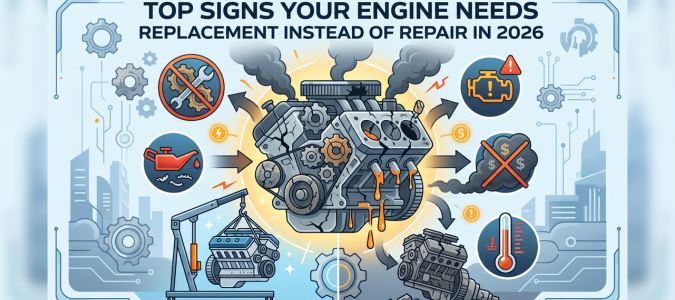
Top Signs Your Engine Needs Replacement Instead of Repair in 2026
The engine is the heart of every vehicle, responsible for generating the power needed to keep your car, truck, or SUV moving. While routine maintenance can significantly extend engine life, there comes a point when repairs may no longer be the most practical or cost-effective solution. In 2026, with rising labor costs and increasingly complex engine designs, vehicle owners are often faced with a difficult question: should the engine be repaired or replaced?
In many cases, installing a replacement engine can provide better long-term value than repeatedly repairing a severely damaged one. This is especially true when high-quality OEM used auto parts and quality used engines are available at a fraction of the cost of a brand-new powertrain.
Understanding the warning signs of a failing engine can help you make an informed decision before repair costs spiral out of control.
Why Engine Problems Are Becoming More Expensive
Modern engines are more advanced than ever before.
Many include:
- Turbochargers
- Direct fuel injection
- Variable valve timing
- Electronic control systems
- Advanced emissions technology
While these innovations improve performance and fuel efficiency, they also make repairs more complicated and costly.
A major engine failure that might have been repairable years ago can now require extensive labor and expensive components.
Excessive Oil Consumption
Some oil consumption is normal, particularly in older vehicles. However, excessive oil usage may indicate serious internal engine wear.
Common causes include:
- Worn piston rings
- Damaged cylinder walls
- Valve seal failures
- Internal gasket problems
If your vehicle constantly requires oil top-offs despite no visible leaks, the engine may be approaching the end of its useful life.
In severe cases, replacement becomes more economical than repeated repairs.
Persistent Blue Exhaust Smoke
Blue smoke coming from the exhaust often indicates that oil is entering the combustion chamber.
This can result from:
- Worn piston rings
- Damaged valve guides
- Cylinder wear
While minor issues can sometimes be repaired, persistent blue smoke typically signals extensive internal damage.
When multiple engine components are affected, replacing the engine may provide better long-term reliability.
Metal Shavings in Engine Oil
Metal particles found during an oil change are a serious warning sign.
These shavings may indicate:
- Bearing failure
- Crankshaft wear
- Connecting rod damage
- Internal component deterioration
Once significant metal contamination occurs, the engine often experiences widespread internal wear.
Repairing individual components may not fully resolve the underlying problem.
Repeated Overheating Issues
Engine overheating can cause catastrophic damage.
Common consequences include:
- Warped cylinder heads
- Cracked engine blocks
- Blown head gaskets
- Damaged pistons
If an engine has experienced multiple overheating events, hidden internal damage may continue causing problems even after repairs.
A replacement engine may ultimately be the more dependable option.
Knocking or Tapping Noises
Unusual engine noises should never be ignored.
Common sounds include:
- Rod Knock: A deep knocking sound often caused by worn connecting rod bearings.
- Valve Train Noise: Tapping sounds that may indicate valve or lifter problems.
- Piston Slap: Noise resulting from excessive cylinder wear.
These symptoms often suggest significant internal wear that may require extensive rebuilding.
Low Compression Across Multiple Cylinders
Engine compression is essential for efficient combustion.
Low compression can result from:
- Worn piston rings
- Damaged valves
- Cylinder wear
- Head gasket failures
When multiple cylinders show poor compression, repair costs can increase rapidly.
Installing one of today’s quality used engines may offer a more affordable and reliable solution.
Frequent Check Engine Light Problems
Modern vehicles use sophisticated engine management systems.
While some warning lights indicate minor issues, repeated engine-related trouble codes may point to deeper mechanical problems.
Examples include:
- Misfires
- Timing issues
- Fuel delivery problems
- Internal engine faults
When multiple systems begin failing simultaneously, replacement may be more practical than ongoing troubleshooting.
Severe Engine Sludge Build-Up
Engine sludge forms when oil degrades and accumulates inside the engine.
Heavy sludge can:
- Restrict oil flow
- Increase wear
- Reduce cooling efficiency
- Damage internal components
Severely sludged engines often suffer from extensive internal deterioration.
Cleaning alone may not restore proper function.
High Mileage Combined With Major Damage
Many modern engines can last well beyond 200,000 miles.
However, when a high-mileage engine experiences major failures, repair investments may become difficult to justify.
Examples include:
- Cracked engine blocks
- Spun bearings
- Severe cylinder damage
- Timing chain failures
In such situations, replacing the engine often provides better value.
Repair Costs Exceed Vehicle Value
One of the most important considerations is financial practicality.
If engine repair costs approach or exceed:
- Vehicle market value
- Replacement engine cost
- Overall ownership goals
then replacement becomes a logical option.
Many vehicle owners choose OEM used auto parts because they provide factory-engineered reliability at significantly lower costs.
Benefits of Choosing a Replacement Engine
A replacement engine offers several advantages:
- Improved reliability
- Lower long-term maintenance costs
- Faster repairs
- Better performance
- Extended vehicle lifespan
These benefits are particularly attractive when quality OEM components are available.
Why Quality Used Engines Are Growing in Popularity
The automotive recycling industry has improved dramatically in recent years.
Modern suppliers often provide:
- Mileage verification
- Vehicle history reports
- Engine testing
- Warranty coverage
As a result, quality used engines have become trusted solutions for vehicle owners seeking affordable repairs.
Many low-mileage replacement engines still have substantial service life remaining.
Environmental Advantages
Replacing a damaged engine with a recycled OEM unit also benefits the environment.
Advantages include:
- Reduced manufacturing demand
- Lower resource consumption
- Less landfill waste
- Extended component life cycles
This makes recycled engine replacement both economical and environmentally responsible.
How to Evaluate Replacement Options
Before purchasing a replacement engine, consider:
- Mileage
- Compatibility
- Warranty coverage
- Supplier reputation
- Inspection documentation
Working with reputable suppliers helps ensure long-term satisfaction and reliability.
Future Trends in Engine Replacement
Industry experts expect continued growth in replacement engine demand due to:
- Rising repair costs
- Longer vehicle ownership periods
- Improved recycling standards
- Better diagnostic technologies
These factors continue making replacement engines an attractive option for many drivers.
Final Thoughts
Determining whether an engine should be repaired or replaced requires careful evaluation of its condition, repair costs, and remaining service life. Warning signs such as excessive oil consumption, blue exhaust smoke, metal contamination, low compression, persistent overheating, and severe internal wear often indicate that replacement may be the smarter investment.
For many vehicle owners in 2026, OEM used auto parts and quality used engines provide an affordable, reliable, and environmentally responsible solution. By recognizing these warning signs early and exploring replacement options, drivers can avoid escalating repair costs and extend the life of their vehicles with confidence.