
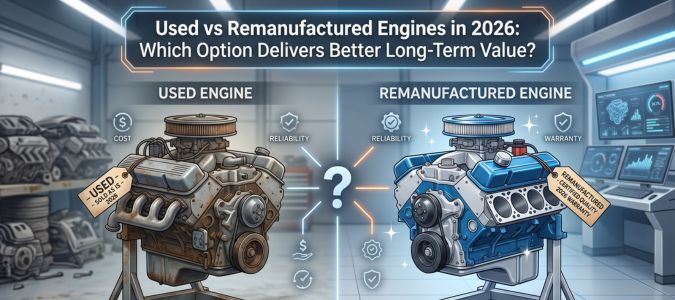
Used vs Remanufactured Engines in 2026: Which Option Delivers Better Long-Term Value?
Engine replacement costs continue rising rapidly in 2026 as modern vehicles become more advanced, technology-driven, and expensive to repair. Whether dealing with engine failure caused by overheating, high mileage, oil starvation, or internal wear, many drivers eventually face a major decision:
Should you choose a used engine or a remanufactured engine?
Both options offer advantages depending on budget, vehicle condition, and long-term ownership goals. As demand for affordable vehicle repairs grows, many car owners are now comparing quality used engines with remanufactured powertrains to determine which solution provides the best long-term value.
This guide explains the key differences between used and remanufactured engines, the pros and cons of each option, and why affordable used engines continue growing in popularity throughout 2026.
What Is a Used Engine?
A used engine is an OEM factory engine removed from:
- Salvage vehicles
- Accident-damaged cars
- Insurance write-offs
- Recycled vehicles
These engines are typically:
- Tested for functionality
- Inspected for damage
- Sold with mileage records
- Removed from running vehicles
Most used engines remain in original factory condition without complete internal rebuilding.
What Is a Remanufactured Engine?
A remanufactured engine is a fully rebuilt engine restored to near-factory specifications. The remanufacturing process usually includes:
- Complete disassembly
- Cleaning and machining
- Replacement of worn parts
- New seals and gaskets
- Reconditioned cylinder heads
- Internal component replacement
Remanufactured engines are rebuilt using both new and reused OEM components.
Why Engine Replacement Is More Common in 2026
Modern engines now face greater stress due to:
- Turbocharging
- Higher operating temperatures
- Smaller engine designs
- Hybrid integration
- Complex emission systems
At the same time, many drivers keep vehicles longer because:
- New vehicle prices are increasing
- Financing costs remain high
- Supply chain issues continue
As a result, engine replacement demand continues rising rapidly.
Benefits of Quality Used Engines
Many drivers choose quality used engines because they offer:
- Lower upfront cost
- Faster availability
- OEM factory reliability
- Easier installation
- Original factory engineering
Low-mileage used engines often provide excellent performance at a fraction of the cost of new or remanufactured units.
Why Affordable Used Engines Are Growing in Popularity
Modern salvage suppliers now offer:
- Compression-tested engines
- Mileage verification
- Warranty coverage
- VIN compatibility checks
This has improved confidence in:
- Affordable used engines
- OEM replacement powertrains
- Salvage engine reliability
For many vehicles, used engines provide the most practical repair solution.
Cost Comparison Between Used and Remanufactured Engines
One of the biggest differences is price.
Used Engines
Typically cost:
- Much less upfront
- Lower labor costs
- Less installation time
Remanufactured Engines
Usually involve:
- Higher purchase price
- Additional labor
- Longer rebuild processes
Drivers focused on affordability often prefer quality OEM used engines.
Reliability Differences
Remanufactured engines may offer:
- New internal components
- Refreshed wear surfaces
- Longer rebuild consistency
However, properly maintained low-mileage used engines can still provide:
- Excellent lifespan
- Strong reliability
- Factory performance
Much depends on:
- Maintenance history
- Mileage
- Supplier reputation
- Testing quality
Why OEM Engineering Matters
Used OEM engines retain original factory engineering. Benefits include:
- Exact compatibility
- Factory tuning
- Easier computer integration
- Reliable sensor communication
This is especially important for modern vehicles with:
- AI diagnostics
- Electronic throttle systems
- Hybrid integration
- Turbocharged engines
Installation Speed Differences
Used engines are often quicker to install because they arrive:
- Fully assembled
- Factory configured
- Ready for replacement
Remanufactured engines sometimes require:
- Additional calibration
- Break-in procedures
- Component transfer work
For drivers needing fast repairs, used engines may offer shorter downtime.
Warranty Considerations
Warranty coverage varies significantly.
Remanufactured Engines
Often include:
- Longer warranties
- More extensive coverage
Used Engines
May include:
- Limited warranties
- Mileage-based coverage
However, many modern salvage suppliers now provide strong warranty protection on quality used engines.
Why Mileage Is Extremely Important
Mileage greatly affects used engine value. Low-mileage engines generally provide:
- Less internal wear
- Better compression
- Longer remaining lifespan
- Reduced maintenance risks
Before purchasing, buyers should verify:
- Odometer records
- Vehicle history
- Oil condition
- Compression testing
Why Remanufactured Engines Cost More
The rebuilding process involves:
- Machining services
- Internal replacement parts
- Labor-intensive rebuilding
- Precision calibration
These additional processes increase overall cost significantly.
While remanufactured engines may offer longer lifespan potential, they are not always the most cost-effective option for every vehicle.
Best Situations for Used Engines
Affordable used engines are often ideal when:
- Vehicle value is moderate
- Budget is limited
- Low-mileage OEM engines are available
- Fast repairs are needed
- Factory compatibility is important
Many SUV, truck, and sedan owners choose used engines to extend vehicle lifespan affordably.
Best Situations for Remanufactured Engines
Remanufactured engines may be better when:
- Long-term ownership is planned
- Vehicle condition is excellent
- Factory engines are unavailable
- Heavy commercial use is expected
They may provide additional long-term durability under demanding conditions.
Environmental Benefits of Used Engines
Reusing OEM engines helps reduce:
- Manufacturing waste
- Scrap metal disposal
- Raw material consumption
- Environmental impact
Automotive recycling plays an increasingly important role in sustainable vehicle repair.
Common Buyer Mistakes
Drivers sometimes make costly mistakes by:
- Buying engines without warranty coverage
- Ignoring mileage history
- Purchasing from unreliable suppliers
- Focusing only on lowest price
Careful inspection and trusted suppliers are essential for long-term reliability.
Technology Is Improving Used Engine Quality
Modern suppliers now use:
- AI-powered diagnostics
- Compression analysis
- VIN verification systems
- Digital inventory tracking
This improves:
- Quality control
- Compatibility accuracy
- Buyer confidence
The used engine industry is becoming far more reliable than in previous years.
Future of Engine Replacement in 2026
As repair costs continue increasing, experts expect stronger demand for:
- OEM used engines
- Certified recycled powertrains
- Smart engine diagnostics
- Warranty-backed salvage components
Vehicle owners are increasingly prioritizing affordability and long-term value.
Final Thoughts
Choosing between used and remanufactured engines in 2026 ultimately depends on budget, vehicle condition, and long-term ownership plans.
For many drivers, quality used engines provide excellent value because they offer OEM reliability, faster installation, and significantly lower costs. Modern affordable used engines are now more dependable than ever thanks to improved testing, warranty protection, and advanced supplier verification systems.
Remanufactured engines may offer longer rebuild consistency, but they also come with higher upfront expenses.
By carefully comparing mileage, warranty coverage, supplier reputation, and repair goals, vehicle owners can choose the engine replacement option that delivers the best long-term value for their specific needs.